
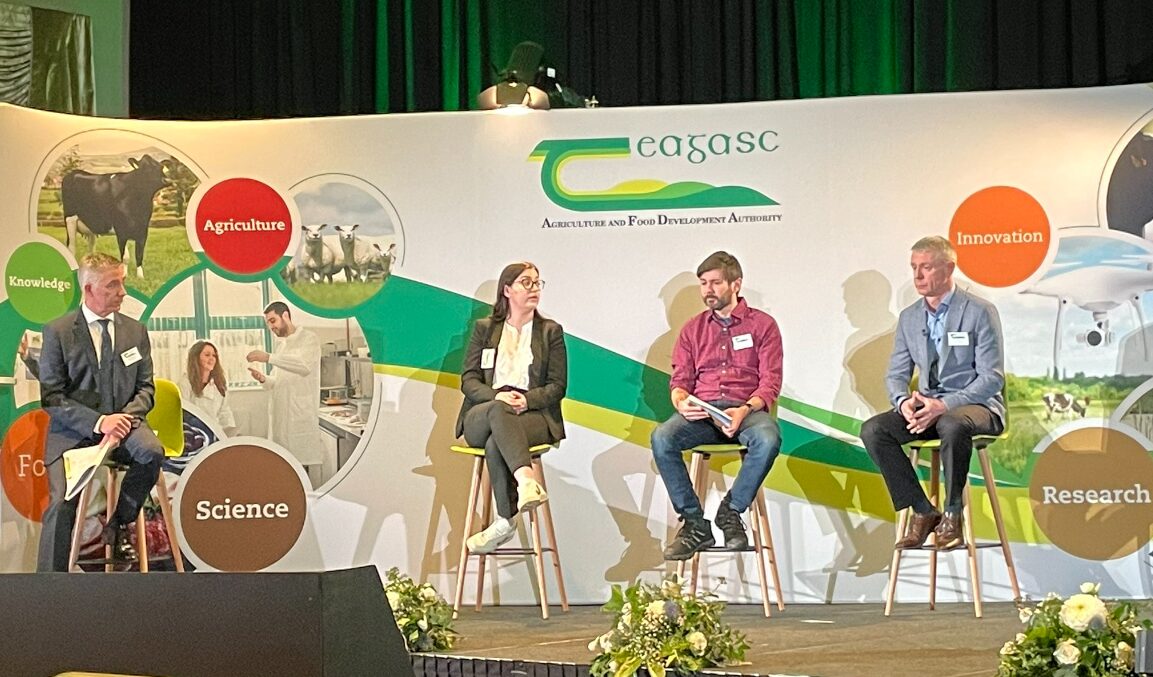
Teagasc will trial a new Barley Yellow Dwarf Virus (BYDV) prediction model over a three year period it has confirmed at the 2023 National Tillage Conference in Co. Kilkenny today (Wednesday, January 25).
Teagasc will trial the UK’s Agricultural Development and Advisory Service (ADAS) new Adas Crop BYDV Assessment Tool (ACroBAT) – which is a replacement for its T Sum tool.
Dr Sacha White from ADAS, UK highlighted to conference delegates why better BYDV decision support tools are important for cereal growers.
Dr White detailed that the new ADAS model draws down information on aphids gained from suction traps.
The senior ADAS researcher said it also takes account of ambient temperature and an estimated value for the proportion of aphids that carry the BYDV virus.
“Previously, it was thought that 10% of aphids carry the virus. It’s now believed this figure is closer to 20%,” he said.
“ACroBAT will also give a real time recommendation as to whether it is economically viable to apply an insecticide.
“The results generated by the new programme are less conservative, in this context, than would have been the case with the T Sum model,” Dr White added.
According to the senior researcher the final report on ACroBAT will be considered by ADAS management over the coming months.
The decision to trial the model in Ireland will allow the data generated by Teagasc’s aphid traps to be fully included within the final crop management recommendations.
In the UK the main BYDV vectors are the bird cherry-oat aphid and the grain aphid.
However, in Ireland, the grain aphid is the almost sole disease vector.
The 2023 National Tillage Conference heard that BYDV can bring about an 80% reduction in grain yield under Irish conditions.
Continue com as notícias que estão puxando a atenção dos leitores
The theme of today’s conference is ‘Mitigating risks that challenge future sustainable production and tillage experts discussed the various BYDV control measures that are now, or will soon be, available to Irish cereal growers.
They detailed that there is a growing anticipation that BYDV resistant or tolerant varieties will play an important role in controlling the disease.
Teagasc tillage specialist Ciaran Collins stressed the role of effective rotation in controlling BYDV.
He said that continuous winter and spring barley-based cropping systems are particularly susceptible to BYDV.
Collins also highlighted that effective management of the green bridges within a tillage operation can also deliver significant BYDV disease control levels.
He said that farmers who are growing organic cereals should be aware that there is a range of natural defence systems that can be employed, from a BYDV control perspective, which also include the use of fungi.
❓ Perguntas Frequentes (5 FAQs Técnicos de Campo)
📌 1. Qual a importância de Tillage Conference: Teagasc to trial BYDV prediction model para o produtor rural?
Garante a otimização de custos, o aumento da produtividade por hectare e o cumprimento das normas sanitárias e ambientais vigentes.
📌 2. Como as recomendações da Embrapa auxiliam em Tillage Conference: Teagasc to trial BYDV prediction model?
A Embrapa fornece dados validados de pesquisa de campo, reduzindo os riscos operacionais e melhorando a eficiência do uso de insumos.
📌 3. Qual a relação entre Tillage Conference: Teagasc to trial BYDV prediction model e o crédito no Plano Safra?
Propriedades com processos regulares e CAR ativo possuem pontuação preferencial na concessão de financiamentos agrícolas com juros reduzidos.
📌 4. Como calcular o retorno financeiro em Tillage Conference: Teagasc to trial BYDV prediction model?
O retorno é medido pelo acompanhamento do Custo Operacional Efetivo (COE) e pelo ganho de produtividade obtido a cada ciclo de produção.
📌 5. Quais as tendências de inovação para Tillage Conference: Teagasc to trial BYDV prediction model em 2026?
Destacam-se a automação por sensores, o uso de inteligência artificial preditiva e o monitoramento em tempo real por imagens de satélite.


