
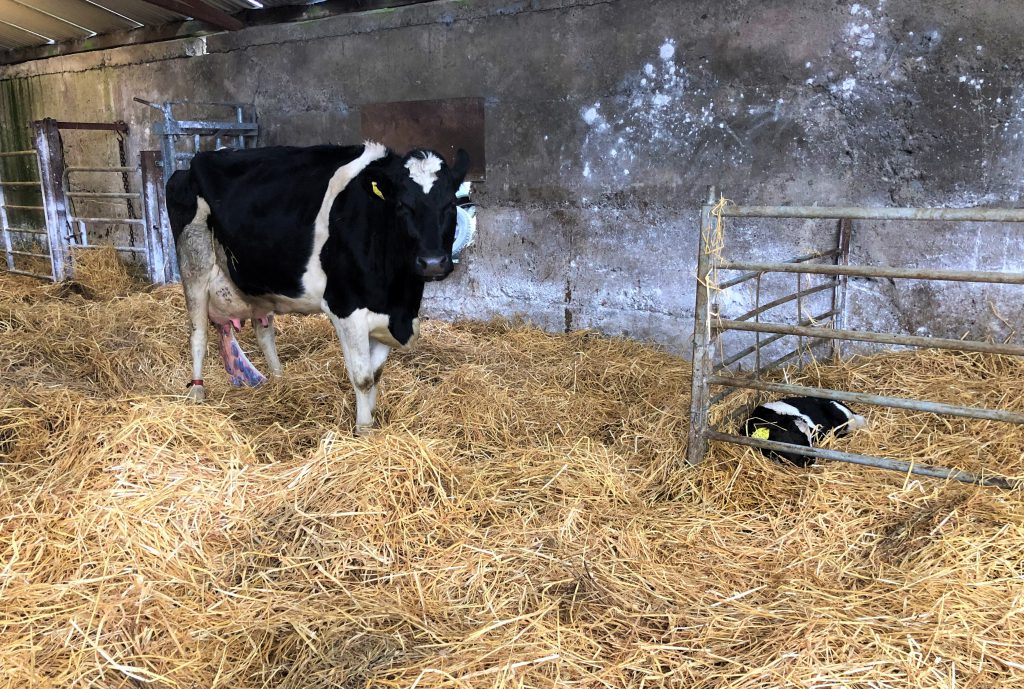

As the spring-calving season kicks off on farms it is important to remember to keep records of cows and calves that will be retained as replacements.
Recording health events can be useful further down the line when making herd decisions.
Having records will also make life much easier when a vet is called to the yard to treat cows or assess cows ahead of breeding.
Hard calvings
Cows that had a difficult calving or twins should be noted in your records. Ahead of the breeding season, these cows may need to be checked.
Hard calvings and twin births often lead to retained placentas or infections within the womb, and these issues can often make it difficult for cows to go in calf without some intervention.
Recording these cows will ensure that they are not missed when pre-breeding checks are being carried out on farms.
This will give them the best chance of going in calf early in the breeding season.
By not getting these cows checked before the start of the breeding, you could be delaying when they conceive – by three weeks or more.
This could possibly reduce your six-week calving rate, thus extending your calving season.
Calves
Recording illnesses in calves is also advised. Pneumonia in calves can cause lasting damage to the lungs, which may increase the likelihood of further issues down the line.
If the ill animal then has issues in the future you may choose not to breed them or to cull them from the herd.
Recording sickness in your calves may also help to identify any patterns within your herd, such as increased sickness in one pen or an ongoing issue with one disease in particular.
Continue com as notícias que estão puxando a atenção dos leitores
Identifying patterns can help develop solutions to prevent them them from happening again.
Records
The more information available to you allows you to make better and more comprehensive decisions, which should improve your farm.
There are many apps and software available to farmers for this, but a simple filing system can work on some farms too.
However, if using the pen and paper method, ensure that you then transfer the information into a more detailed notepad that is kept in the house or farm office.
For example, have a page for cows that you want to get scanned ahead of breeding, so when it comes time to scan you have already identified the cows that need to be looked at.
❓ Perguntas Frequentes (5 FAQs Técnicos de Campo)
📌 1. Qual a importância de The importance of keeping records this calving season para o produtor rural?
Garante a otimização de custos, o aumento da produtividade por hectare e o cumprimento das normas sanitárias e ambientais vigentes.
📌 2. Como as recomendações da Embrapa auxiliam em The importance of keeping records this calving season?
A Embrapa fornece dados validados de pesquisa de campo, reduzindo os riscos operacionais e melhorando a eficiência do uso de insumos.
📌 3. Qual a relação entre The importance of keeping records this calving season e o crédito no Plano Safra?
Propriedades com processos regulares e CAR ativo possuem pontuação preferencial na concessão de financiamentos agrícolas com juros reduzidos.
📌 4. Como calcular o retorno financeiro em The importance of keeping records this calving season?
O retorno é medido pelo acompanhamento do Custo Operacional Efetivo (COE) e pelo ganho de produtividade obtido a cada ciclo de produção.
📌 5. Quais as tendências de inovação para The importance of keeping records this calving season em 2026?
Destacam-se a automação por sensores, o uso de inteligência artificial preditiva e o monitoramento em tempo real por imagens de satélite.


