
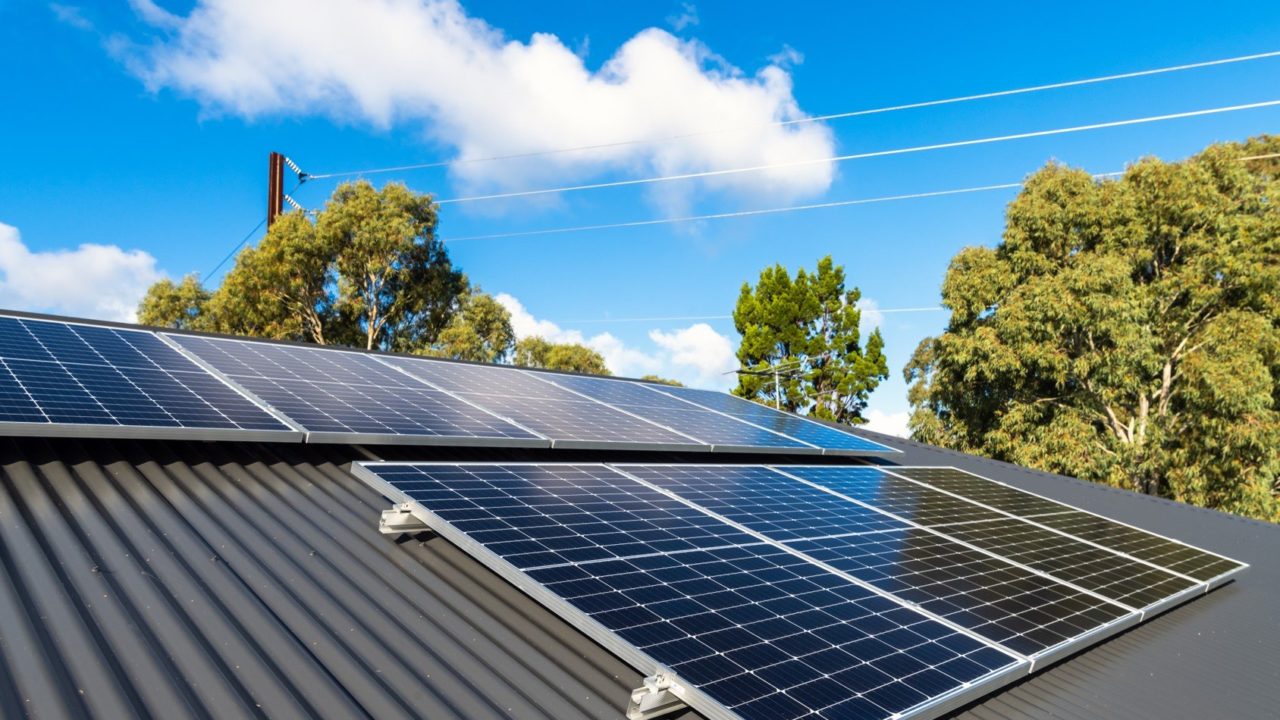

Senator Victor Boyhan has stated that he “strongly endorses” the agriculture committee’s report on solar energy on farms, and said it will help farmers to reduce their costs and meet sectoral targets.
The Joint Oireachtas Committee on Agriculture, Food and the Marine (JOC) released a report on the topic this week, which promotes and encourages the installation of solar panels on agricultural buildings.
14 key recommendations are outlined in the report and Senator Boyhan has called for each of them to be implemented as soon as possible, otherwise he said “the report will gather dust on the shelves of policy aspirations like so many others coming out of Leinster House”.
The report states that solar energy microgeneration on farms could become a crucial support for agricultural revenues in the future, and could also help the sector to meet its legally binding 25% emissions reduction target. He said:
“The adoption and deployment of solar technology on farms has been identified as a key element in meeting these targets given its potential to offset costs and act as a revenue generator, with the potential of enhancing family farm incomes.”
Although Senator Boyhan welcomed this, he added that “a coherent strategy” which contains a number of funding incentives and opportunities for farming communities must be rolled out by the government.
He stated that measures will be required if the goal of installing solar panels on “every appropriate farm building” in the drive to cut carbon emissions is to be met.
“A solar energy plan for farm communities needs timelines and resources for implementation,” he added.
Continue com as notícias que estão puxando a atenção dos leitores
The report itself urges the government to explore ways that the upfront costs of installing solar panels on their holdings could be “offset” and suggested low-interest loans or the possibility to sell on surplus electricity to the national grid.
Other recommendations in the report include:
- The Departments of Agriculture, Food and the Marine (DAFM) should establish a cross-departmental one-stop shop to inform and encourage farmers about solar energy technology opportunities;
- The Departments of Housing, Local Government and Heritage should exempt solar panels on farm buildings from requiring planning permission;
- The Department of the Environment, Climate and Communications should examine the potential of delivering a mechanism where farmers are able to store excess electricity generated through the national grid and receiving a comparative amount of energy or credit in return.
❓ Perguntas Frequentes (5 FAQs Técnicos de Campo)
📌 1. Qual a importância de Senator calls for proposals in solar report to be introduced promptly para o produtor rural?
Garante a otimização de custos, o aumento da produtividade por hectare e o cumprimento das normas sanitárias e ambientais vigentes.
📌 2. Como as recomendações da Embrapa auxiliam em Senator calls for proposals in solar report to be introduced promptly?
A Embrapa fornece dados validados de pesquisa de campo, reduzindo os riscos operacionais e melhorando a eficiência do uso de insumos.
📌 3. Qual a relação entre Senator calls for proposals in solar report to be introduced promptly e o crédito no Plano Safra?
Propriedades com processos regulares e CAR ativo possuem pontuação preferencial na concessão de financiamentos agrícolas com juros reduzidos.
📌 4. Como calcular o retorno financeiro em Senator calls for proposals in solar report to be introduced promptly?
O retorno é medido pelo acompanhamento do Custo Operacional Efetivo (COE) e pelo ganho de produtividade obtido a cada ciclo de produção.
📌 5. Quais as tendências de inovação para Senator calls for proposals in solar report to be introduced promptly em 2026?
Destacam-se a automação por sensores, o uso de inteligência artificial preditiva e o monitoramento em tempo real por imagens de satélite.


