
There has been, and will continue to be, an increased focus on the quality of non-replacement calves from dairy herds.
A number of concerns have been raised around the sale of calves in marts and the need to improve the saleability of calves.
The selling of surplus calves from spring-calving herds is important for a number of reasons, including the creation of space and an injection of cash-flow after a number of months with little revenue coming in.
A number of measures can be adopted by farmers to ensure that they get good prices for their calves this spring.
Non-replacement calves
Firstly, you need to ensure that the calves are the correct age for sale and that they are in good health.
Calves can be sold from 10 days-of-age, but calves going for export need to be at least 14-days-old.
Where possible, you should be keeping calves until at least 14-days-old to ensure that they are healthy enough to travel and also to ensure they are suitable for export.
Any calf that is sick or shows signs of illness should be kept until they are fully recovered.
When you are sending calves to the mart they should be bright, responsive, alert and overall, be and look healthy.
Colostrum
The feeding of high-quality colostrum should be given to all calves, no matter the sex or breed.
Calves are born with no immunity and can only gain immunity from material antibodies contained within colostrum.
The antibodies contained within the colostrum protect the calf until its own immune system is fully functional. This passive immunity helps to protect the calf from disease and bacteria such as scour.
Scour is the biggest killer of calves under one-month-of-age. Sick calves cannot be sold, which means that the calf remains on the farm for longer and has an increased rearing cost.
If you have vaccinated for scour, the only way a calf will receive these antibodies is through the colostrum.
Having high levels of hygiene is also important as sickness from one pen can easily be spread to another.
Continue com as notícias que estão puxando a atenção dos leitores
Housing
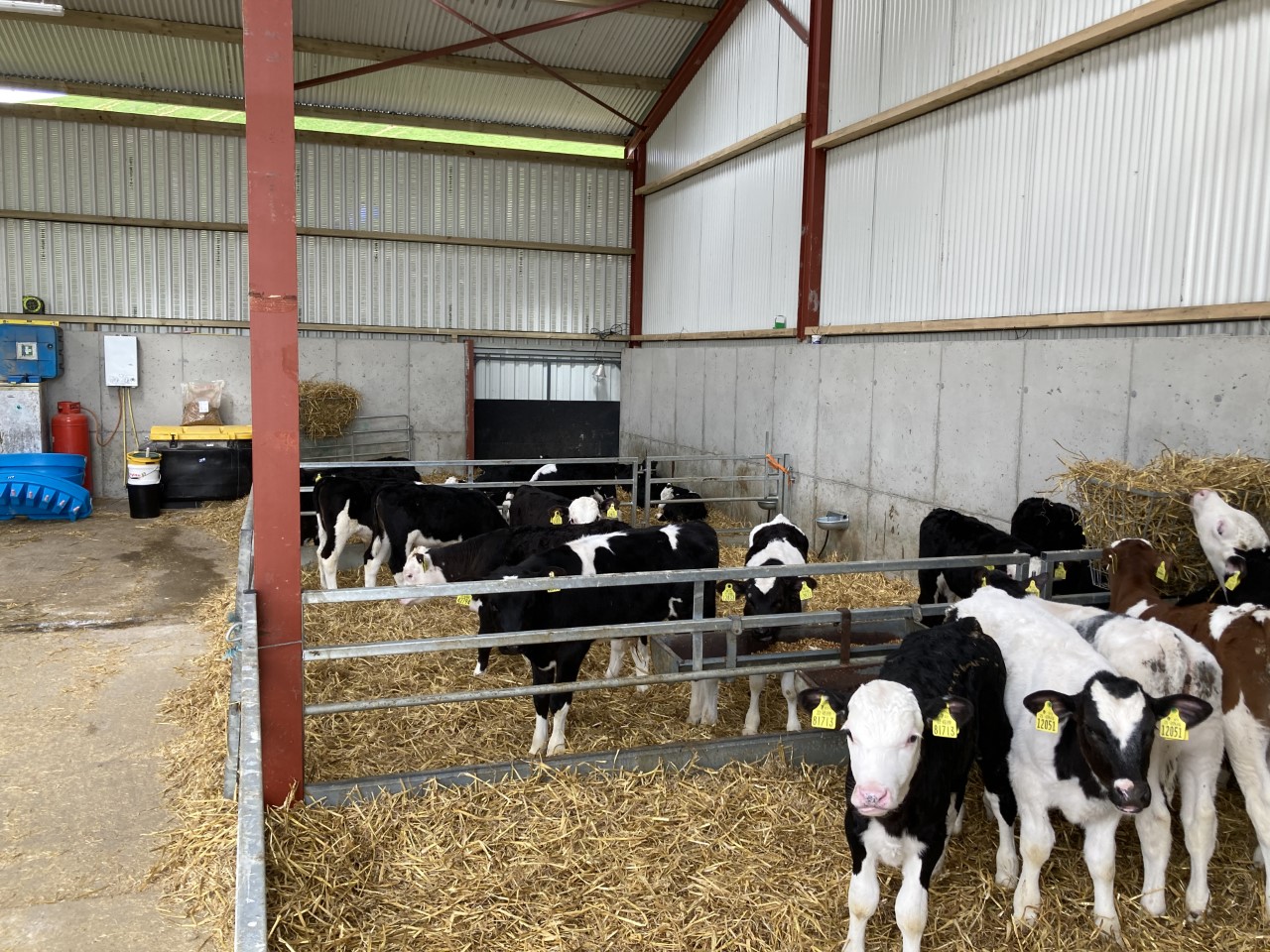
Calf housing plays a major role in keeping young calves healthy; calves that are sick will have a reduced level of growth performance and will have to stay on farms for longer.
Calves should be housed in a building that is fit for purpose, which is free of draughts. In sheds where draughts can be an issue, bales of straw can be used as a way of blocking the wind.
Calves should be bedded on a deep bed of straw, which helps them to maintain body heat and put energy into growth rather then keeping warm.
If temperatures drop, calves should be offered extra milk, as they will use energy to keep warm rather than grow.
The bedding needs to be changed regularly and you should house calves that will be sold at the same time, together.
Sale
Calves that are to be sold at the same time should be housed together and transported to the mart together to reduce stress.
These calves should also be offered a feed before they leave the farm; healthy, well-grown, full calves are more likely to catch the eye of buyers. This should result in better prices being paid for your calves.
Early reports suggest a positive calf trade for the spring, but calves that are looked after and are full of life will always catch the eye of buyers.
❓ Perguntas Frequentes (5 FAQs Técnicos de Campo)
📌 1. Qual a importância de Increasing the saleability of non-replacement calves this spring para o produtor rural?
Garante a otimização de custos, o aumento da produtividade por hectare e o cumprimento das normas sanitárias e ambientais vigentes.
📌 2. Como as recomendações da Embrapa auxiliam em Increasing the saleability of non-replacement calves this spring?
A Embrapa fornece dados validados de pesquisa de campo, reduzindo os riscos operacionais e melhorando a eficiência do uso de insumos.
📌 3. Qual a relação entre Increasing the saleability of non-replacement calves this spring e o crédito no Plano Safra?
Propriedades com processos regulares e CAR ativo possuem pontuação preferencial na concessão de financiamentos agrícolas com juros reduzidos.
📌 4. Como calcular o retorno financeiro em Increasing the saleability of non-replacement calves this spring?
O retorno é medido pelo acompanhamento do Custo Operacional Efetivo (COE) e pelo ganho de produtividade obtido a cada ciclo de produção.
📌 5. Quais as tendências de inovação para Increasing the saleability of non-replacement calves this spring em 2026?
Destacam-se a automação por sensores, o uso de inteligência artificial preditiva e o monitoramento em tempo real por imagens de satélite.


