
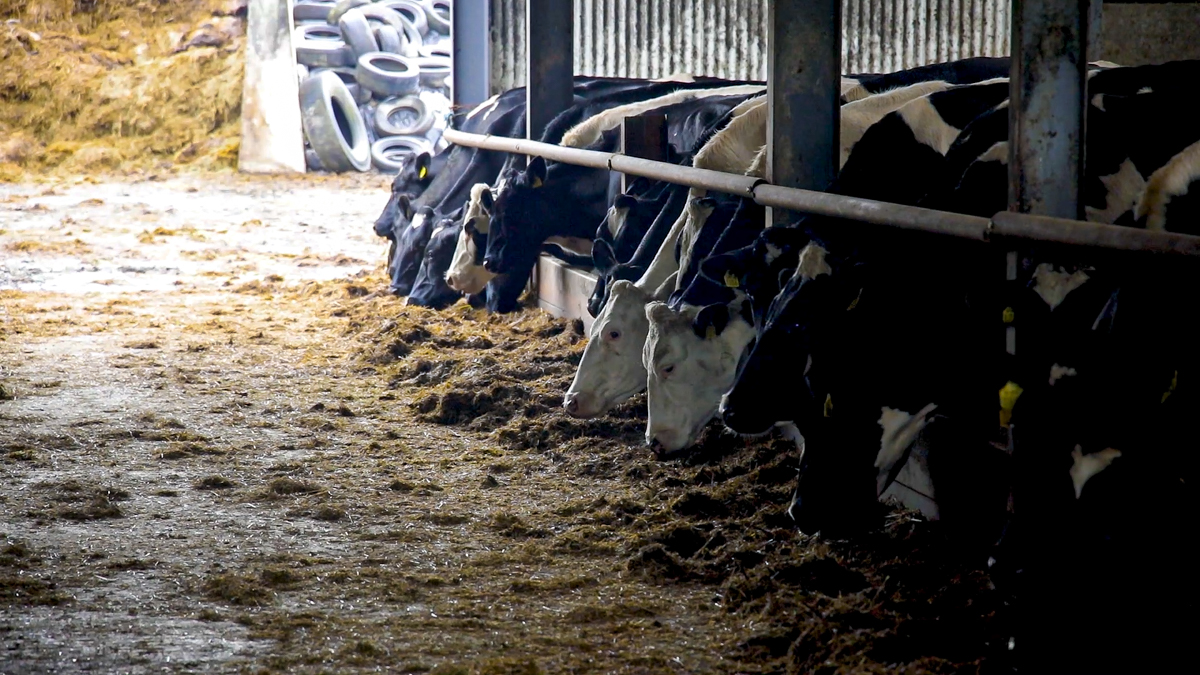
The focus on autumn-calving herds is now moving towards the breeding season, as the number of calves being born reduces.
To ensure it’s success, farmers need to focus on a number of keep points, to the maximum number of cows go in-calf.
Most farms will also be breeding a number of heifers, but for the most part once the heifers are in the correct condition there should be no issues with them going in-calf.
The majority of issues will be with the cows that have already had a calf and have potentially picked up an infection or cyst along the way.
Breeding season
Before breeding gets underway it is important to ensure that all cows are cycling and thus able to go in-calf.
Any cows that have been calved long enough and are not cycling need to be handled by the vet to determine if there is an issue.
Other cows that should checked for issues are cows that had a difficult calving or twins.
Any cows that could potentially have issue should be checked and treatment given if required.
Scanning or checking the entire herd is unnecessary; cows that have been seen in heat do not need to be checked by the vet.
BCS in autumn-calving herds
As autumn-calving herds head towards the breeding season it is important to begin monitoring body condition scores (BCS).
BCS on a five-point scale:
When assessing a cow’s BCS, the key areas to check are the fat cover over the loin, plates and pin bones of the pelvis, and the tail areas using your hand.
Score 1: Individual transverse processes are fairly sharp to the touch and there is no fat around the tail head. Hip bones, tail head and ribs are visually prominent.
Continue com as notícias que estão puxando a atenção dos leitores
Score 2: Transverse processes can be identified individually when touched, but feel rounded rather than sharp. There is some tissue cover around the tail head and over the hip bones. Individual ribs are no longer obvious.
Score 3: Transverse processes can only be felt with firm pressure. Areas either side of the tail head have a fat cover that is felt easily.
Score 4: Fat cover around the tail head is evident as slight ’rounds’, and is soft to touch. Transverse processes cannot be felt even with firm pressure. Folds of fat are developing over the ribs.
Score 5: Bone structure is no longer noticeable and the animal presents a ‘blocky’ appearance. Tail head and hip bones are almost completely buried in fat, and folds of fat are apparent over the ribs. Transverse processes are completely covered by fat, and the animal’s mobility is impaired.
Autumn-calving cows that are in a condition score of 2.75 or less need to be monitored and their BCS increased before breeding begins.
Failure to do so will have a negative impact on their fertility performance during the breeding season.
❓ Perguntas Frequentes (5 FAQs Técnicos de Campo)
📌 1. Qual a importância de Dairy advice: Preparing for the breeding season para o produtor rural?
Garante a otimização de custos, o aumento da produtividade por hectare e o cumprimento das normas sanitárias e ambientais vigentes.
📌 2. Como as recomendações da Embrapa auxiliam em Dairy advice: Preparing for the breeding season?
A Embrapa fornece dados validados de pesquisa de campo, reduzindo os riscos operacionais e melhorando a eficiência do uso de insumos.
📌 3. Qual a relação entre Dairy advice: Preparing for the breeding season e o crédito no Plano Safra?
Propriedades com processos regulares e CAR ativo possuem pontuação preferencial na concessão de financiamentos agrícolas com juros reduzidos.
📌 4. Como calcular o retorno financeiro em Dairy advice: Preparing for the breeding season?
O retorno é medido pelo acompanhamento do Custo Operacional Efetivo (COE) e pelo ganho de produtividade obtido a cada ciclo de produção.
📌 5. Quais as tendências de inovação para Dairy advice: Preparing for the breeding season em 2026?
Destacam-se a automação por sensores, o uso de inteligência artificial preditiva e o monitoramento em tempo real por imagens de satélite.


