
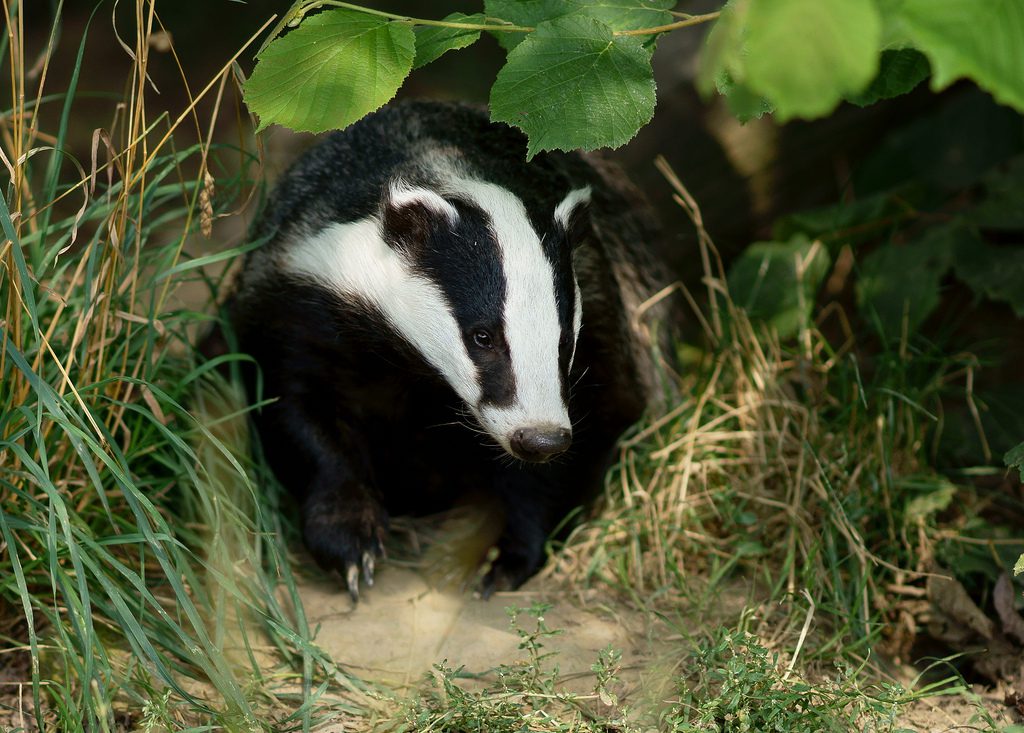
Culling badgers will have “no meaningful impact” on campaigns designed to eradicate bovine tuberculosis (bTB), according to a leading UK animal welfare consultant.
Tris Pearce, from the Shropshire-based family run ecological and wildlife consultancy, today (Tuesday, March 7), outlined at an event in Stormont, hosted by the Ulster Society for the Protection of Animals (USPCA), why he believes badgers should not be seen as the major driver of bTB.
“If every badger in the country was vaccinated against bTB, there would still be a residual problem in livestock.
“The core challenge remains that of eradicating TB within the cattle population.”
He is an advocate of vaccinating all newborn calves as a key approach to dealing with the bTB challenge.
“This should be the fundamental driver of any campaign that has been designed to eradicate this terrible disease.
“But politics has always come into play in not making this happen.
“Vested interests, including the farming unions and the practising vets, are very much opposed to the farming industry going down the vaccination route, where bTB is concerned,” Pearce stated.
He also dismissed claims that badger culls in different parts of the UK had helped to reduce bTB levels, as “very misleading”.
Pearce said:
“This is a very complicated subject and getting up-to-date information from the relevant authorities has proven extremely difficult.
“But we do know that in areas where bTB levels have come down, badger culling has been accompanied by enhanced cattle control measures.”
In his opinion modern cattle management systems have aided and abetted the spread of bTB.
“The growing adoption of total confinement systems means that cattle are living inclose proximity to each the year round.
“So the potential for bTB to spread from animal to animal is greatly enhanced,” he warned.
Continue com as notícias que estão puxando a atenção dos leitores
Pearce also believes that large volumes of slurry spread and silage create a perfect storage system for bTB to flourish in.
“The fact is that bTB bacteria can live under anaerobic conditions for up to months.
“As a result they will be readily ingested by grazing cattle or brought back into a farming system through their presence in silages.”
“It is also unfair that the entire focus of the wider bTB transmission challenge has been focused ion badgers when we know that deer, otters and event rats can both contract and spread the disease,” he added.
Northern Ireland’s Department of Agriculture, Environment and Rural Affairs (DAERA) has proposed a bTB badger intervention.
This would entail an initial cull of these animals in many areas, followed by the introduction of a capture, vaccination and release policy.
The Alliance Party’s agriculture spokesman, John Blair, who hosted the USPCA event at Parliament Buildings, Stormont said his party is opposed to the DAERA proposal.
“The prevention of animal cruelty must be a priority at all times.
“I fully recognise the desire of the farming community to have bTB eradicated. What’s needed is a stronger commitment on the part of DAERA to push forward with more research on this critically important issue,” he added.
❓ Perguntas Frequentes (5 FAQs Técnicos de Campo)
📌 1. Qual a importância de Culling badgers not the answer warns UK consultant para o produtor rural?
Garante a otimização de custos, o aumento da produtividade por hectare e o cumprimento das normas sanitárias e ambientais vigentes.
📌 2. Como as recomendações da Embrapa auxiliam em Culling badgers not the answer warns UK consultant?
A Embrapa fornece dados validados de pesquisa de campo, reduzindo os riscos operacionais e melhorando a eficiência do uso de insumos.
📌 3. Qual a relação entre Culling badgers not the answer warns UK consultant e o crédito no Plano Safra?
Propriedades com processos regulares e CAR ativo possuem pontuação preferencial na concessão de financiamentos agrícolas com juros reduzidos.
📌 4. Como calcular o retorno financeiro em Culling badgers not the answer warns UK consultant?
O retorno é medido pelo acompanhamento do Custo Operacional Efetivo (COE) e pelo ganho de produtividade obtido a cada ciclo de produção.
📌 5. Quais as tendências de inovação para Culling badgers not the answer warns UK consultant em 2026?
Destacam-se a automação por sensores, o uso de inteligência artificial preditiva e o monitoramento em tempo real por imagens de satélite.


