
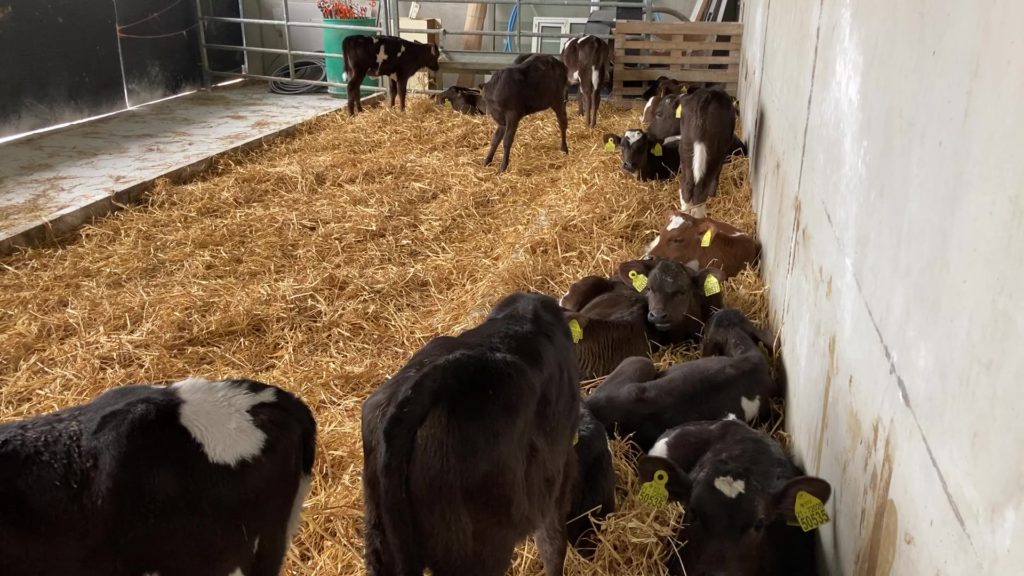
The latest calf registration figures from the Irish Cattle Breeding Federation (ICBF) show that a total of 168,912 calves were registered in the last week.
With the figure for calves registered ending the week February 17, this brings the total number of calves to 494,048 for the year to date.
This is 26,403 behind the same period in 2022, when 520,451 calves had been registered.
Calf registrations
A total of 154,030 calves were registered to dairy dams in the week ending February 17, which is 4,131 fewer than the same period in 2022 when some 158,161 calves were registered to dairy dams.
Overall, the number of calves registered to dairy dams stands at 426,295, which is 20,590 fewer than 2022 when the figure stood at 446,885 head.
The number of calves registered to beef dams is also down on 2022 figures, with 5,813 fewer calves registered so far this year.
Some 14,882 calves were registered to beef dams in the week ending February 17, which is 2,445 behind the same period in 2022 when 17,327 calves were registered.
The total number of beef calves registered in 2022 stands at 67,753, whereas for the same period in 2022 the figure stood at 73,566 head.
Calf registrations up to and including the week ending February 17, 2023, and how many were registered in said week:
- Dairy calf births: 426,295 (+154,030);
- Beef calf births: 67,753 (+14,882);
- Total births: 494,048 (+168,912).
Increasing day time calvings
The next few weeks will see calves arriving on farms thick and fast, which can often result in a number of long nights for farmers.
Continue com as notícias que estão puxando a atenção dos leitores
But there are a number of measures that farmers can use to increase the number of cows that calve during the day.
Research conducted by Teagasc determined that feeding silage to cows at night increases the number of day time calvings.
This practice reduced the number of cows calving between 12:00a.m and 6:00a.m from 25% down to 10-15%.
But this practice is only really suitable where adequate feeding space is provided for all cows – which is at least 0.6m/cow.
❓ Perguntas Frequentes (5 FAQs Técnicos de Campo)
📌 1. Qual a importância de Calf registrations down 26,000 compared to 2022 para o produtor rural?
Garante a otimização de custos, o aumento da produtividade por hectare e o cumprimento das normas sanitárias e ambientais vigentes.
📌 2. Como as recomendações da Embrapa auxiliam em Calf registrations down 26,000 compared to 2022?
A Embrapa fornece dados validados de pesquisa de campo, reduzindo os riscos operacionais e melhorando a eficiência do uso de insumos.
📌 3. Qual a relação entre Calf registrations down 26,000 compared to 2022 e o crédito no Plano Safra?
Propriedades com processos regulares e CAR ativo possuem pontuação preferencial na concessão de financiamentos agrícolas com juros reduzidos.
📌 4. Como calcular o retorno financeiro em Calf registrations down 26,000 compared to 2022?
O retorno é medido pelo acompanhamento do Custo Operacional Efetivo (COE) e pelo ganho de produtividade obtido a cada ciclo de produção.
📌 5. Quais as tendências de inovação para Calf registrations down 26,000 compared to 2022 em 2026?
Destacam-se a automação por sensores, o uso de inteligência artificial preditiva e o monitoramento em tempo real por imagens de satélite.


