Thank you for reading this post, don't forget to subscribe!
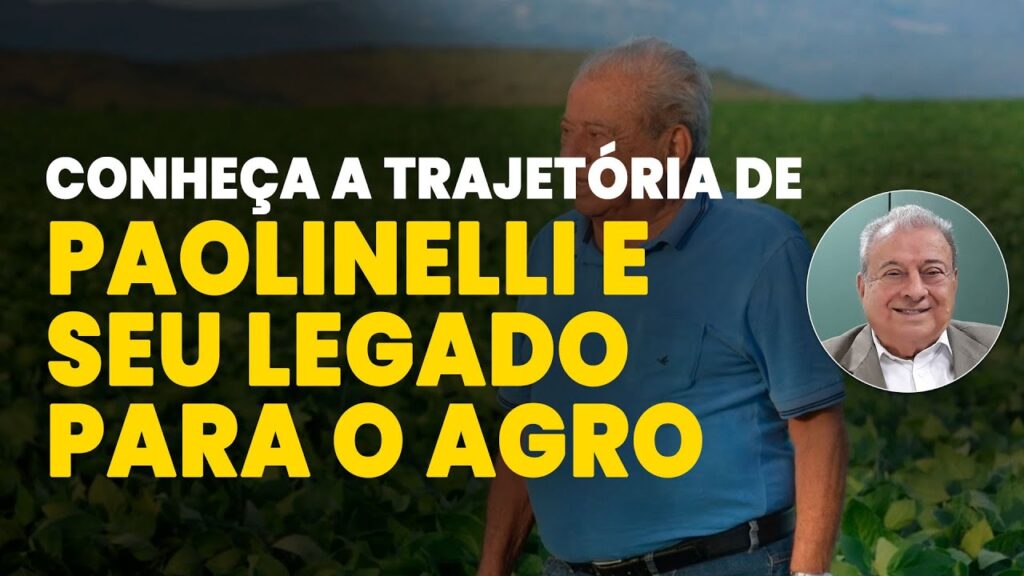
Entrevista com o Dr. Alisson Paulinelli
Uma vida dedicada ao desenvolvimento agronômico do Brasil
Por: Equipe de AgriculturaFazBem
Aprecie essa entrevista exclusiva com o Dr. Alisson Paulinelli, que compartilha sua jornada de vida e suas reflexões sobre o futuro da agricultura e da juventude do Brasil. Conheça a visão inspiradora desse ícone do agro brasileiro e sua inabalável confiança no potencial da nova geração de profissionais da agricultura.
1. Qual a importância do conteúdo do post para a atualidade?
Resposta: O conteúdo do post aborda questões relevantes da agricultura, incluindo a evolução tecnológica, a produção sustentável e a responsabilidade dos jovens agrônomos e produtores brasileiros. Essas questões são fundamentais para o desenvolvimento e aperfeiçoamento da agricultura brasileira.
2. Como o legado do Dr. Alisson Paulinelli influencia a geração atual e futura de agricultores?
Resposta: O legado de Alisson Paulinelli influencia a atual geração e futura de agricultores ao destacar a importância da competência, da busca por informações e do aperfeiçoamento constante na produção agrícola. Ele também ressalta a necessidade de sabedoria e responsabilidade na condução da agricultura, incentivando os jovens a corrigir os erros do passado e buscar soluções inovadoras.
3. Quais são os desafios e oportunidades para os jovens na atualidade e no futuro da agricultura brasileira?
Resposta: Os desafios para os jovens na agricultura brasileira incluem a necessidade de lidar com a evolução tecnológica, a produção sustentável, a independência de produtos químicos e a busca por soluções para problemas como a fome, a miséria e as correntes migratórias. As oportunidades incluem a capacidade de aproveitar o conhecimento e a tecnologia disponíveis para promover mudanças positivas e sustentáveis na agricultura.
4. Como a trajetória e as experiências de Alisson Paulinelli podem servir de inspiração e aprendizado para os jovens na agricultura?
Resposta: A trajetória de Alisson Paulinelli, com seus desafios, conquistas e atuação em prol do desenvolvimento da agricultura brasileira, serve de inspiração e aprendizado para os jovens na agricultura. Suas experiências demonstram a importância da determinação, da busca por conhecimento e da atuação responsável e ética na agricultura.
5. Qual a mensagem final de Alisson Paulinelli para os jovens agrônomos e produtores brasileiros?
Resposta: A mensagem final de Alisson Paulinelli destaca a importância da confiança na juventude, ressaltando que ela será responsável por corrigir os erros do passado e promover mudanças positivas na agricultura. Ele incentiva os jovens a buscar a competência, a sabedoria e a responsabilidade necessárias para enfrentar os desafios atuais e futuros da agricultura brasileira.
I always advocated that Brazil deserved a new award, but I was speaking in terms of the nation, not an individual. However, throughout these 50 years of work in which I dedicated myself to agricultural activities, I ended up making many friends, and some of them were more eager and ended up recommending me to be the representative of Brazil on that prize. Consequently, I have a great certainty that Brazil deserves the award.
Hello everyone, today we are continuing with our project of interviews with the icons of agriculture, and it is a great pleasure to be interviewing someone who is one of the main responsible for our country becoming the world’s leading agricultural producer. Our interviewee today is Dr. Alisson Paulinelli. Welcome, Minister. It is with great honor, professor, that I have the opportunity not only to listen but also to exchange ideas, and any questions that I can answer. All of us know your professional history and the importance of your work in transforming an agriculture that was not sufficient to supply Brazil into a country that is now an exporter of various agricultural products. However, we also want to get to know a little bit about the person Alisson Paulo. Please continue a little about your background. Who was the young Alisson Paulinelli? Well, the young boy from Bambuí was born in Bambuí, right in the West of Minas. It is the second municipality of the Rio São Francisco, and it was a small city back then, but it has grown a lot and is still growing even today. Fortunately, it now has a good Education Center, the Federal Institute, and that was where I was born. Coincidentally, this Federal Institute was my first residence, and I will explain why. I was the son of an agronomist and a teacher. My father ended up having a certain leadership in the region and was elected mayor. When he was elected mayor, the first thing he sought was how to improve the agriculture in the region. Even though the region was very good, with 80% of the land good for agriculture, he was concerned and wanted to do something to improve the region. At the beginning of his term as mayor, he managed to open an agricultural post for the region, which he accepted with great enthusiasm. However, he was very happy with it until he found out that this agricultural post was an experimental farm. Let´s call it that, and could only be managed by an agronomist. Coincidentally, he was the only agronomist in the region. He called the vice-mayor and said, “I am going to pass the city hall to the vice-mayor, and I am going to manage this farm. Therefore, my life began. I was very young, and my father was building and trying to make a farm work in that region. This was a very unusual fact, and it was very happy for me. It was a coincidence that my brother, who came a year and a half after me, had problems at birth, and my mother not only lost the brother but also the ability to have more children, and I ended up becoming the only child. You know that an only child has some privileges, and the first one is to accompany the father. I accompanied him a lot and saw the effort he made to convince the region’s farmers of how production could be improved. He knew that the traditional and archaic system that had been inherited from grandparents and great-grandparents was not competitive for the producers. They had no income, which was the worst part, and most of the seeds were produced by the government, the seedlings were also government-owned, and the only tractor available was from the government. They had a metal-plated motorized plow, and whoever knew how to manage the process had to be trained for it. He made a great effort, and I remember his lectures very well. The questions, answers, and mainly the doubts from the farmers were indelibly marked in my mind. The questions, answers, and mainly the doubts from the farmers were indelibly marked in my mind. It marked me when I was 17; I went to talk to my father and said, I want to study Agronomy. I am listening to you, so choose a school for me to attend. I can work and study. He was very moved and said, “From now on, all of this is yours. You can start.” He asked me a question; he was always very objective. Are you studying agronomy because of my influence, or do you have a vocation? I insisted, saying that I undoubtedly have a vocation. With his experience, he said, “We will see. From January, you are going to manage my property and the inheritance from my father, which is rented by your uncle. I want to see if you really have a vocation. Professor, it was the best thing he ever did. He was afraid that I would be like some of his colleagues, who studied and were in Belo Horizonte and made no difference between a bull and its horns, saying, “For God’s sake, don’t let me lose my honor. You must learn all of this. I want you to learn all of this.” It was the best thing he ever did, the way I got to know rural life. It was very good. My uncle was an expert, a very entrepreneurial man who worked, knew everything, and advised me naturally. That’s how I learned to milk, tie up cows, milk cows, bandage wounds, beat grass, find a place to herd pigs. It was new discoveries for me that probably helped me a lot during my course. Something interesting happened, and he advised me to choose an activity that didn’t interfere with my studies. The farm wasn’t that big; it was 80% cerrado and 20% land of various crops. Ok, I continued. If I continue, I am going to continue with the lowest parts of the rice, the highest parts of the corn, the beans together. The pigsty, however, protected a bit. With all those little bikes, it was natural. That’s where I started to really experience the problems that I would face at university. It was very good because I want to tell you that 23 years later, my two sons did the same, and I didn´t have time back then. I was appointed as the Minister, and I called my brother-in-law to buy a piece of land near Brasília. “I want a small farm so I can do the same thing.” “And I didn’t do a bad job. They help me today and are grateful for having trusted my father’s wisdom. Great. Then you had to move from Bambuí to Viçosa, as we know you studied at the Lavras School of Agricultural Engineering. My question is, how was it to communicate with your parents being an only child and now so far from home? It wasn’t easy. I was always very daring, very restless. When my father asked me to choose a school, my mother had studied at the Gama Institute and had great enthusiasm for it. In Lapras, there was a significant mission in Minas Gerais, especially in Lavras and the surrounding area, which was very conducive to agricultural activities. When Dr. Samuel raised funds, the Gama Institute was created, and he hired professionals, especially those from the United States, to establish the school of Progeny with all the shortcomings. Yeah, the American mission had a little bit of money and it made it possible, modestly, to create a school where according to my father, you will have a quality education, the American style, and above all, you will be an agronomist with potential. But for me, the most important thing was that that school from beyond the character, the moral, and the civic formation of the students was perfect. That’s all I wanted, and so it was. At Lapras, I completed my high school and passed the entrance exam in good conditions. I won a scholarship for maintenance, allowing me to help in the school’s laboratories and activities during the four years I was there, and it helped me a lot. I ended up taking a course that I considered quite reasonable; I was always very agitated. I had a vein for politics, and I don’t hide it at any hour. So much so that I was president of the academic center for two years. First, I won the election by 14 votes, and then the second one was zero. So, I wasn’t such a bad politician. After graduating from the prestigious school, there was a symbol of two lights, and found out that this Ubaldo was very afraid of the dark. Is that how it was? No, it wasn’t just him. It was a joke we played. There were actually two dorms. I lived in the top one, and from time to time, we had interesting relations with our neighbors. Because we respected the neighborhood just like we had here, we had a colleague with a nickname “Avocado,” who had a large garden producing fruits and vegetables. It was excellent. We received a generous gift of pork, and immediately started preparing to rob the bottom dormitory. It was a time of great agitation in Lavras. The light was very bad, and we almost had to light matches to see if the lighting was correct. We suffered a lot. And then, we started to make up stories about robbery and we would go to the bedroom of Vespa and Baldo and tell them these stories until 8 or 10 at night. The truth is, we started to make a plan to rob them. Eventually, we made it through. We were able to open their door, and then around 2 am, we made sure the coast was clear so we could proceed with the robbery. We chose three from the top dorm and arranged so well that we managed to leave their door open. You can imagine the situation. We pointed at knives, and gloves, such as we were all masked in black. Professor, you wouldn’t believe it; Baldo was almost caught from the surprise. After insisting that they had been robbed, he had eaten a lot. That was the end of their insistence, and in fact, since the succulent feast was a bit extravagant, let’s just say that the last piece of pork stayed stuck, and they started to argue. This fact also took place in Viçosa over the years with many students, but a funny fact from that time is that we also planned to close England. I built a fence of 6000 kilometers, and it was 80 meters high. It was a communication barrier that would be equivalent to closing England. It was difficult. I learned that this activity was easy just talking; we fought all night. I was trying to close England. The experience was well-lived. There were many problems that I encountered, but in the ending, everything was fine. Great story! In the era of the wireless internet, there were some students who were visiting the Orchard at the university without permission, causing trouble for the guards. Could you tell us how this story happened? This wasn’t easy; it happened often on Saturdays and Sundays. The orchard was far away; where the university headquarters are currently, it was a kilometer and a half away, and today it’s even a good one; it was still uninhabited back then. We had some trails, and we used a bag, well, we stole a lot of fruit, and almost always we ran to check if we were being chased away. More than noticeable, your pants were stuck on the fence. A fact that also occurred in Viçosa over the years with many students, but some strange event of that time was the closure of England. An incredible story, Minister. We must finish our conversation here, inviting everyone to subscribe to the “Agricultura Fazer” channel because new videos with new icons will also be posted there. Thank you all very much, Professor!
Este texto não reflete, necessariamente, a opinião do Jornal Do Campo
Obrigado por nos contar sua incrível história, Dr. Alisson Paulinelli. Seu exemplo de liderança e dedicação ao desenvolvimento sustentável da agricultura no Brasil é inspirador e valoroso. Desejamos que sua mensagem de confiança na juventude agrônoma e produtora seja ouvida e que seu legado continue guiando o país para um futuro próspero. Obrigado mais uma vez por compartilhar sua sabedoria conosco.